Most of us don’t think twice before filling a glass of water. It’s clear, it’s cold, it tastes fine — so it must be safe, right? That assumption is exactly why so many families across India unknowingly consume water that’s putting their health at risk every single day.
The importance of access to clean water isn’t just a public health slogan you see on posters. It’s a daily reality that affects how well your kids grow, how often your family falls sick, and even how long you live. In this article, we’re going to go beyond the usual “water is life” statements and actually answer the questions people search for when they want to understand this properly.
What Does “Clean Drinking Water” Actually Mean?
Clean drinking water isn’t just water that looks clear. It’s water that’s free from harmful levels of bacteria, viruses, heavy metals, pesticides, and dissolved solids — the kind of contaminants you can’t see, smell, or taste.
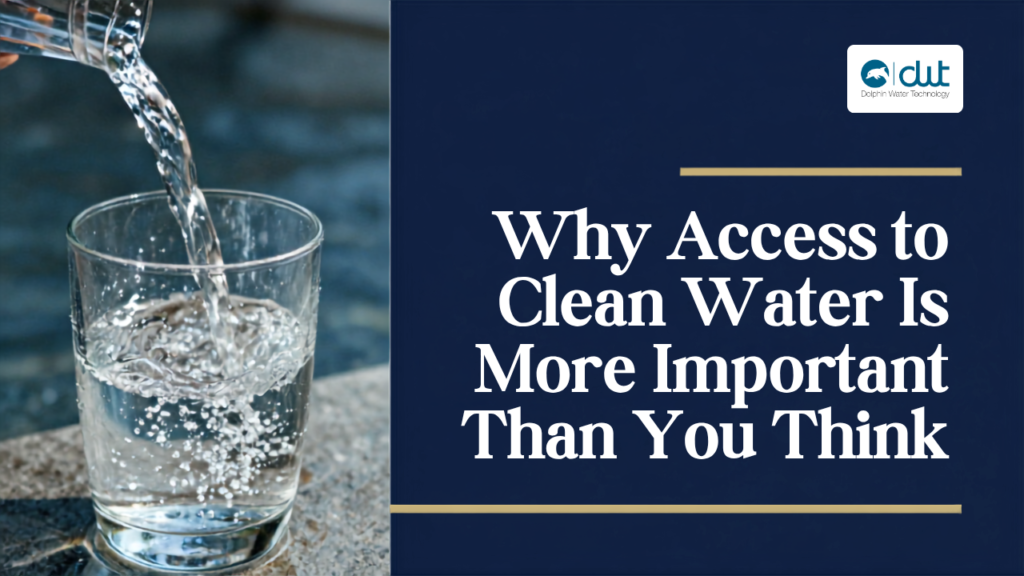
This is where most people go wrong. Appearance is not a reliable test. A glass of borewell water can look absolutely spotless and still carry fluoride, arsenic, or nitrate levels far above what’s considered safe. That’s why understanding why access to safe drinking water is important starts with letting go of the idea that “looks clean” means “is clean.”
Why Is Access to Clean Water and Sanitation Important?
According to WHO and UNICEF, more than 2 billion people around the world still lack access to safely managed drinking water, making waterborne illness one of the most preventable — yet persistent — health crises globally. Sanitation and clean water go hand in hand: contaminated water sources are frequently linked to poor sanitation infrastructure, and the two problems tend to compound each other.
When either one is missing, the consequences show up almost immediately in a community — more diarrheal disease, more hospital visits, and a heavier burden on families who can least afford it. This is why why is it important to have clean water and sanitation is really one combined question, not two separate ones. You can’t fully solve one without addressing the other.
Hidden Contaminants You Can’t See
Here’s the part that surprises most people: the water sitting in your tank or coming out of your tap could contain any of the following, even if it tastes perfectly normal:
- Bacteria and viruses – E. coli, salmonella, and other pathogens from sewage contamination
- Heavy metals – lead, arsenic, and mercury, often from old pipes or industrial runoff
- Fluoride and nitrate – common in groundwater and borewell sources across many Indian states
- Pesticide residues – from agricultural runoff into rivers and groundwater
- Total Dissolved Solids (TDS) – excess minerals and salts that affect both taste and safety
None of these give themselves away through color, smell, or taste. That’s exactly why relying on your senses to judge water quality is a gamble you don’t want to take with your family’s health.
The Real Health Risks of Unsafe Water
Drinking contaminated water doesn’t always cause immediate, dramatic symptoms. Sometimes the damage is slow and cumulative. Broadly, the risks fall into a few categories:
Physical health – Waterborne diseases like typhoid, cholera, and hepatitis A remain common in areas with poor water treatment. Even low-level, chronic exposure to contaminants like fluoride can cause dental and skeletal issues over time.
Children’s development – Kids are especially vulnerable. Repeated bouts of diarrhea from unsafe water can lead to malnutrition and stunted growth, since the body absorbs fewer nutrients during illness.
Pregnancy – Expecting mothers exposed to contaminated water face higher risks of infection, which can affect both maternal and fetal health.
Elderly health – Weaker immunity means older adults often experience more severe complications from waterborne infections.
Skin health – Hard water and water high in chlorine or heavy metals can trigger dryness, irritation, and other skin issues with regular exposure.
Think about a family relying on untreated borewell water through the monsoon months. The water might run perfectly clear from the tap. But monsoon runoff often carries bacteria and pesticide residue straight into groundwater sources. Without proper filtration, that “clear” water could quietly be responsible for the stomach infections going around the house that season — and nobody would think to blame the water first.
Signs Your Water May Be Contaminated
While you can’t rely on appearance alone, there are some warning signs worth paying attention to:
- Unusual taste — metallic, salty, or bitter
- A chlorine-like or rotten-egg smell
- Cloudiness or visible particles after settling
- Frequent, unexplained stomach upset in the household
- Stains on utensils, clothes, or bathroom fixtures (a sign of hard water or excess minerals)
- Scaling inside kettles or geysers
If you notice any of these, it’s worth getting your water tested rather than guessing.
How Do You Know Your Drinking Water Is Actually Safe?
The only reliable way is testing. A basic water quality test checks TDS levels, pH, hardness, and the presence of common contaminants. Many local municipal bodies publish water quality reports, which is a good starting point if you’re on a municipal supply. For borewell or tanker water, an independent test is strongly recommended since quality can vary significantly even between neighboring homes.
Comparing Water Sources and What They Need
Different sources carry different risks, and understanding this helps you choose the right treatment approach instead of a one-size-fits-all filter.
| Water Source | Common Risks | Treatment Typically Needed |
|---|---|---|
| Municipal supply | Chlorine residue, pipeline contamination | Carbon filtration + UV |
| Borewell | High TDS, fluoride, arsenic | RO purification |
| Tanker water | Bacterial contamination | RO + UV |
| River/surface water | Sediments, microbes | Multi-stage filtration |
This is also why “which purifier is best” doesn’t have a single universal answer — it depends heavily on your water source.
Common Myths About Drinking Water
Myth: Clear water is always safe. Not true. Most dangerous contaminants are invisible, odorless, and tasteless.
Myth: Boiling removes everything harmful. Boiling kills bacteria and viruses effectively, but it does nothing for heavy metals, fluoride, or dissolved chemical contaminants — in fact, boiling can slightly concentrate some of these as water evaporates.
Myth: Bottled water is always healthier than filtered tap water. Bottled water quality varies widely, and a good home RO system often delivers more consistent purification than many bottled options.
Myth: RO purification strips out all minerals, making it unhealthy. Modern RO systems, including mineral-retention technology, are designed to remove harmful contaminants while preserving essential minerals your body needs.
Why Access to Clean Water Is Important Beyond Just Health
The impact of clean water access reaches further than most people realize:
- Economic benefits – Fewer sick days mean better productivity and lower medical expenses for families
- Workplace productivity – Employees with reliable access to safe drinking water at work take fewer sick leaves
- Food safety – Clean water is essential for washing produce, cooking, and food preparation
- Environmental impact – Reducing dependency on single-use bottled water cuts down significantly on plastic waste
This is really the core of why is access to clean water important — it’s not an isolated health issue, it touches nearly every part of daily life.
Choosing the Right Purification Solution
Once you understand your water source and its specific risks, choosing a purification system becomes a lot more straightforward. RO purification is generally recommended for borewell and groundwater sources with high TDS or fluoride content, while UV and carbon filtration work well for municipal supplies with lower mineral content but potential microbial or chlorine concerns.
This is exactly the kind of assessment we focus on at Dolphin Water Technology (DWTechno). Rather than pushing a single product for every situation, we look at your specific water source — whether it’s a home on municipal supply or a commercial setup relying on borewell water — and recommend RO purification systems built for that reality, from domestic units to larger commercial installations.
Frequently Asked Questions
How much water should different age groups drink daily? Roughly 2.7 liters for adult women and 3.7 liters for adult men per day, per general health guidelines, though needs vary with climate, activity level, and health conditions. Children typically need less, scaled to age and body weight.
Can boiling water remove all contaminants? No. It handles biological contaminants like bacteria and viruses but doesn’t remove heavy metals, fluoride, or many dissolved chemicals.
Which purifier is suitable for borewell versus municipal water? Borewell water generally needs RO purification due to high TDS and mineral content, while municipal water often only needs carbon filtration plus UV disinfection.
Is alkaline water necessary for good health? There’s no strong scientific consensus that alkaline water offers significant health benefits over properly purified regular water. Focus on purity and mineral balance first.
Key Takeaways
Clean drinking water isn’t something you can judge by looking at a glass. The real risks — bacteria, heavy metals, fluoride, pesticide residue — are invisible, which is exactly why testing and proper purification matter so much. Understanding your specific water source, watching for warning signs, and choosing the right treatment method are the practical steps that actually protect your family’s health.
At Dolphin Water Technology, this is the problem we work on every day — helping households and businesses get water purification that’s actually matched to their water source, not a generic solution sold to everyone the same way.